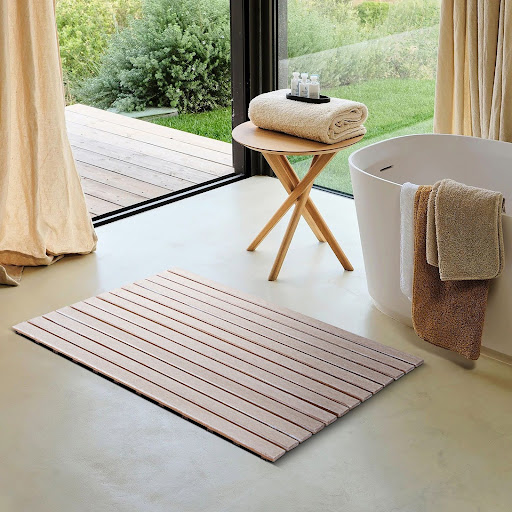
Wet areas are where flooring fails fastest and where small mistakes show up the fastest.
In commercial spaces, a slippery surface is not just inconvenient – it is a safety risk with real consequences, including liability and operational disruption. In residential settings, the problem appears differently. A damp, poorly performing mat or surface can disrupt hygiene and undermine the overall feel of a space designed to be clean and comfortable.
Water changes how materials behave. Surfaces that perform well in dry conditions can lose stability, wear unevenly, or become unsafe under constant moisture. Over time, this also increases maintenance demands and reduces the life of surrounding finishes. That is why solutions like shower mats need to be considered as part of the system – especially in spaces where water exposure is continuous.
What Makes a Wet Area Surface Work
A shower mat does more than cover the floor – it manages how wet area surfaces handle water and movement together.
Without a reliable grip underfoot, even well-designed surfaces introduce risk. This is where anti-slip shower mats become critical, ensuring stability remains consistent with every step, even in fully wet conditions.
Effective surfaces manage water actively, not just conceal it. When water collects, the problem remains. The goal is to allow it to pass through or disperse, keeping the contact surface usable rather than saturated and enabling faster drying, which directly supports hygiene.
Material behaviour dictates long-term performance. Absorbent materials inevitably deteriorate – inviting odor, discoloration, and microbial growth. In contrast, stable materials maintain both structure and hygiene even under continuous exposure.
In barefoot environments, comfort is quiet but critical. The surface must feel secure and temperature-neutral, neither harsh nor uncomfortably cold, especially in spaces used every day.
These factors are interconnected – and they are ultimately shaped by the material and structure of the mat itself.
Two Common Approaches to Shower Mats
Most shower mats solve these challenges through two distinct material approaches–each responding to wet conditions in fundamentally different ways.
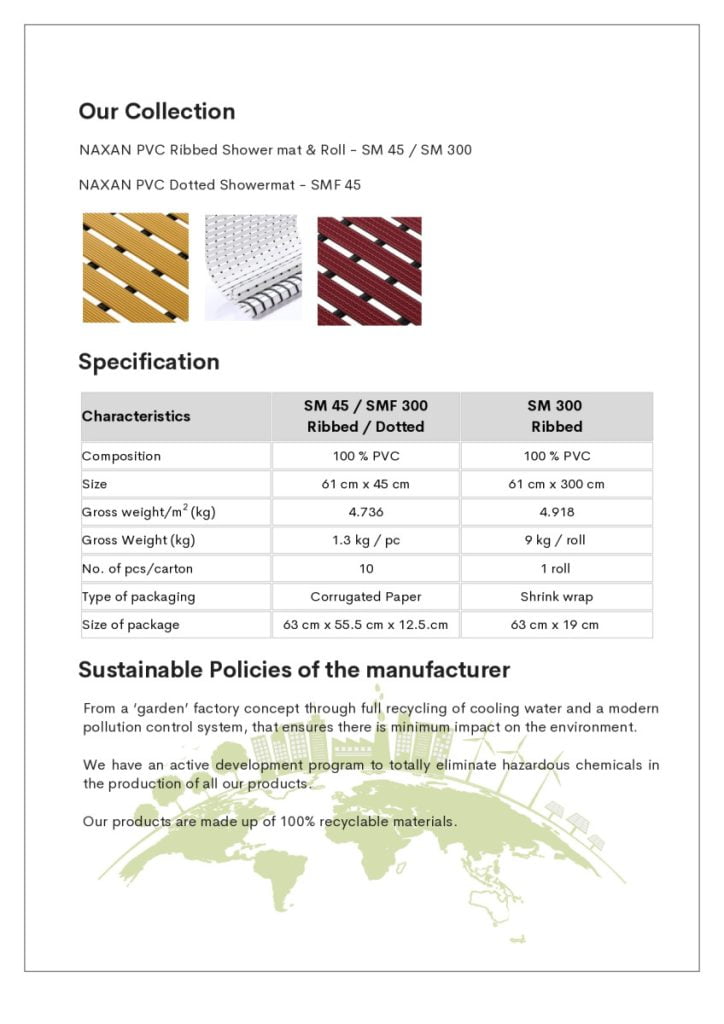
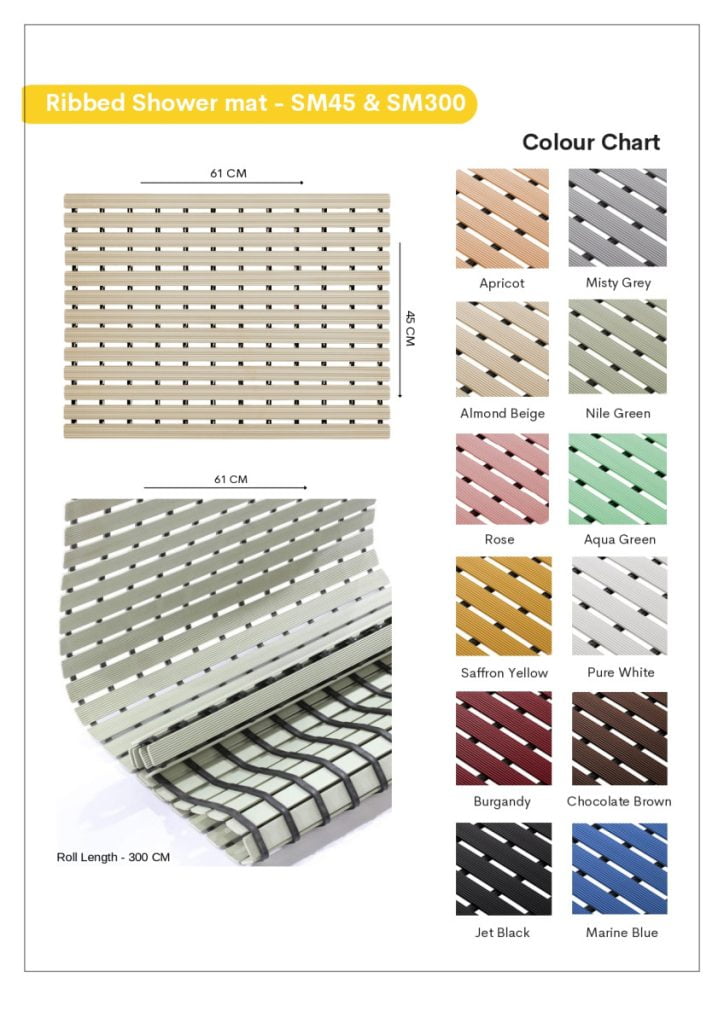
PVC shower mats are widely used for their practicality and flexibility. Designed as ribbed or slatted surfaces with built-in drainage gaps, they allow water to pass through while maintaining grip. Their flexible construction lets them sit directly on the carpet floor, and they can often be rolled, cut, or adjusted as needed.
These solutions are easy to handle, simple to clean, and well-suited to high-turnover environments where utility is the priority. Their ease of replacement also makes them practical in spaces where wear is expected and maintenance cycles are frequent.
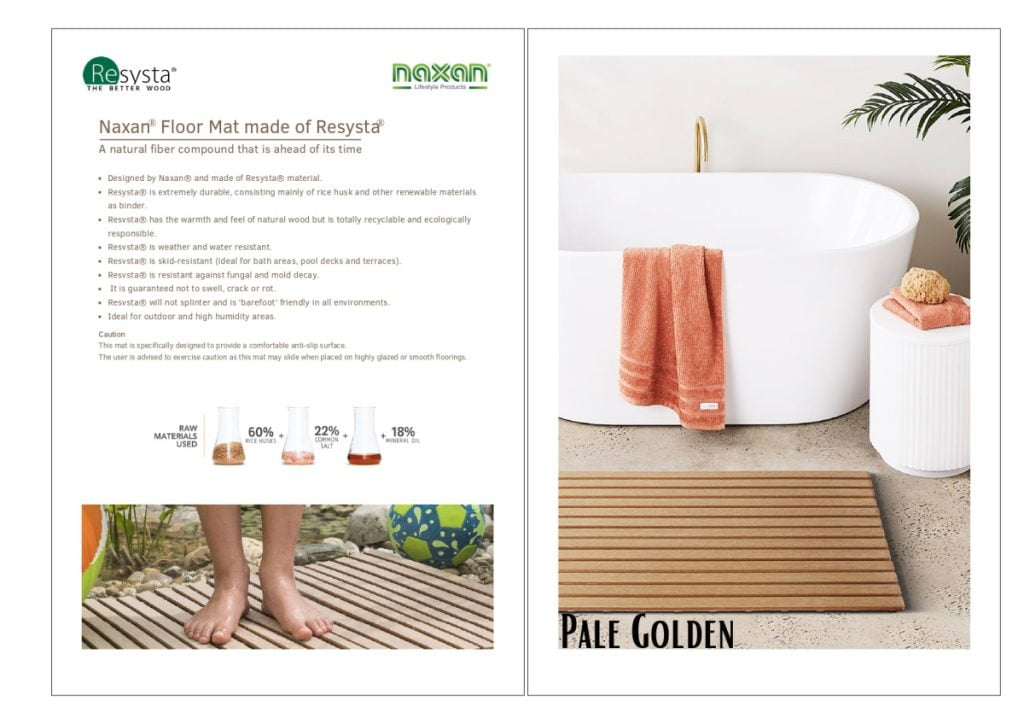
In contrast, spaces that demand greater permanence benefit from natural composite shower mats. Instead of adapting flexible materials to wet conditions, they create a stable surface inherently resistant to moisture.
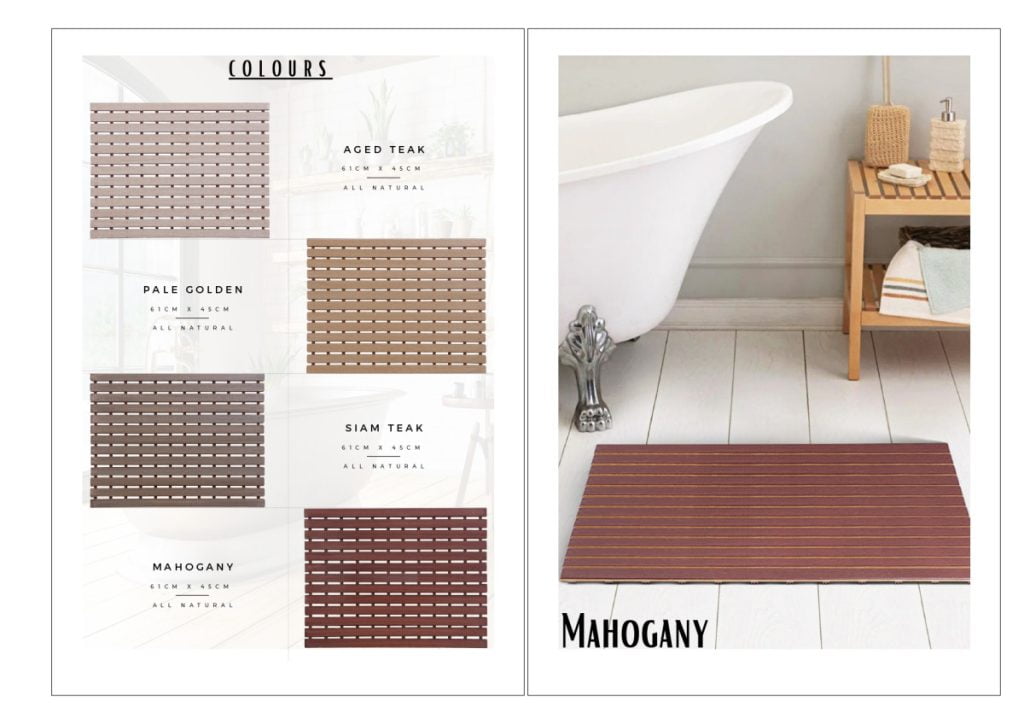
Typically formed as rigid, slatted platforms or modular boards that sit slightly above the carpet flooring India, these systems allow water to pass through while keeping the walking surface dry and stable. This separation between surface and base layer helps maintain consistent performance, even with continuous exposure.
Materials such as rice husk-based composites retain the visual warmth of wood without its typical failures in wet environments. They do not swell, rot, or deteriorate easily, and they remain consistent across both indoor and semi-exposed conditions.
The distinction is not about better or worse – it is about how each material performs over time within its intended environment.
Where These Solutions Apply
While most people associate shower mats with bathrooms, these solutions extend well beyond typical use.
They are just as relevant as shower mats for bathrooms in pool decks, spa zones, outdoor showers, balconies, and utility areas – spaces where water exposure is frequent and often continuous.
In such environments, surfaces are tested every day. Choosing the right approach ensures that movement remains safe, comfort is maintained, and the space continues to perform consistently over time.
Closing Thoughts
In wet areas, performance is not tested occasionally – it is tested every day.
The materials that succeed are not those that resist water, but those designed to function within it – maintaining stability, comfort, and reliability through constant use. When chosen well, these solutions support the space quietly, without demanding
constant attention or frequent replacement.